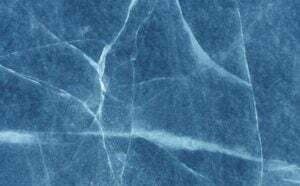


How Does Blue Marble Differ From Classic Marble?
Blue marble and more classic white or off-white marbles form through the same basic metamorphic process. Both blue and white marbles start as limestone or dolomite that is buried, then altered by heat, pressure, and time.
This process occurs deep within the earth, but variations and distinctions come from differences in the original limestone and the impurities present.
The pure carbonate rock then recrystallises to create the dense, crystalline texture that makes marble such a unique and visually arresting material.
What Makes Classic White Marble “White”?
Classic whites (such as Carrara or other similar forms) develop when the original limestone is extremely pure. If there are very low levels of secondary minerals, such as clays, iron oxides, and silicates, the recrystallised calcite appears white or offwhite. Any minor traces of foreign material comes out in the form of the classic veining or streaks in the marble.
What Gives Blue Marble Its Colour?
In contrast, blue marble forms from less pure limestones. These stones contain specific mineral impurities or blends that produce the blue colouring and tones seen today.
Different trace minerals react differently depending on the deposits. They are redistributed and recrystallised, forming the blue tones and veining that make blue marble so iconic and distinctive.
How Do the Veining and Patterns Differ?
With classic white marble, veining tends to be more subtle and often appears grey. This reflects the contrast between nearly pure white calcite and small amounts of darker impurities.
With many blue marble varieties, the wider mix of minerals creates stronger contrasts, more dramatic swirls of colour, and in some cases gold or white veins within a single slab.
What Does This Mean for Selecting and Using Blue Marble?
Because white marble usually has a more consistent, pale background, it often reads as timeless and minimal, ideal where a calm, classic look is needed (e.g. traditional bathrooms, understated benchtops, museum-like spaces).
Blue marble, thanks to its bold pattern and striking colour scheme, works best when used as a feature element or to create a focal point.
This can include:
- Statement walls
- Feature island benchtops
- Luxury bathroom vanities etc.
How Can Blue Marble Create Unforgettable Statement Walls?
Blue marble effortlessly transforms ordinary rooms into spectacular spaces.
When used for statement walls, blue marble creates an instant focal point. Its natural veining and gradient shifts mimic the visual impact of abstract art. With no two slabs ever looking exactly the same, each installation is truly unique.
When designing your wall, consider bookmatching. This technique mirrors two slabs for perfect symmetry, turning your wall into a feature installation that rivals a piece of art.
Incorporate blue marble into hallway entrances
Use it as feature panels in open-plan layouts
Place it behind fireplaces for high impact
Pair with warm lighting to enhance depth and reflectivity
What Makes Blue Marble Perfect for Luxury Bathrooms?
When it comes to bathrooms, blue marble evokes a luxurious sense of serenity and spa-quality opulence.
The interplay of light, especially natural light, and the surrounding complementary visuals of water accentuate its blue tones.
If you are considering using blue marble for your bathroom, consider pairing it with neutral flooring or soft greys to highlight its natural beauty but without overpowering the space.
- Use as wall cladding behind a freestanding bath
- Use for a luxury bathroom vanity
- Apply it to shower recesses
- Pair blue marble with brushed brass, matte black, or white fittings
How Else Can You Use Blue Marble for Big Impact?
Blue marble is not limited to bathrooms and walls. Its versatility allows it to elevate almost any room in the home, fitting seamlessly into modern, coastal, or classic interiors.
Kitchens
Few things are as gorgeous and eye-opening as a blue marble benchtop, splashback, or waterfall islands.
Furniture Accents
Using blue marble for custom tabletops or shelving with bespoke finishes is a wonderful though lowkey way of incorporating this beautiful stone.
How Can You Use Lighting to Enhance the Beauty of Blue Marble?
Lighting can make or break an interior design, and with a material as visually rich as blue marble, it becomes even more important.
Soft LED wall washing or directional downlighting can highlight natural translucence
Warmer lighting accentuates gold and grey veining
Cooler lighting intensifies blue hues for a modern aesthetic
Want to Transform Your Home With Blue Marble?
The right Blue Marble stone can transform an indoor or outdoor space.
Whichever option you choose from our curated selection of blue stone varieties, you’ll enjoy breathtaking beauty, practical durability and flexibility in application.
So visit our showroom, request a quote or just have a chat to our blue marble experts to find the perfect variety to transform your home.
Frequently Asked Questions about Blue Marble
Azul Macaubas, Sodalite Blue, and Azul Bahia are all highly popular forms of blue marble, beloved for their vibrant tone variations and durability.
You can explore Euro Marble’s selection of blue marble varieties online or in our showroom.
Yes, it is. Blue marble, as with other forms of natural stone, is highly durable in areas such as bathrooms and kitchens. Of course, it is recommended that you use proper sealing to ensure its quality, aesthetic, and integrity is maintained.
Yes it can. The team here at Euro Marble are not just experts in helping you find the right variety of blue marble to suit your particular and individual application. We also help to advise on how your chosen slab can be best customised for your needs. From bespoke cutting and finishing, to professional installation we can tailor your marble to suit your preferences and application.