
Travertine Blocks
There is a point in every ambitious stone project where sheet material reaches its limit. A joint line interrupts a sightline. A profile calls for more depth than a slab can offer. A curve needs to flow without a seam breaking its rhythm. This is where travertine blocks come in — solid volumes of natural stone that give architects, designers and builders the freedom to shape continuous, uninterrupted form.
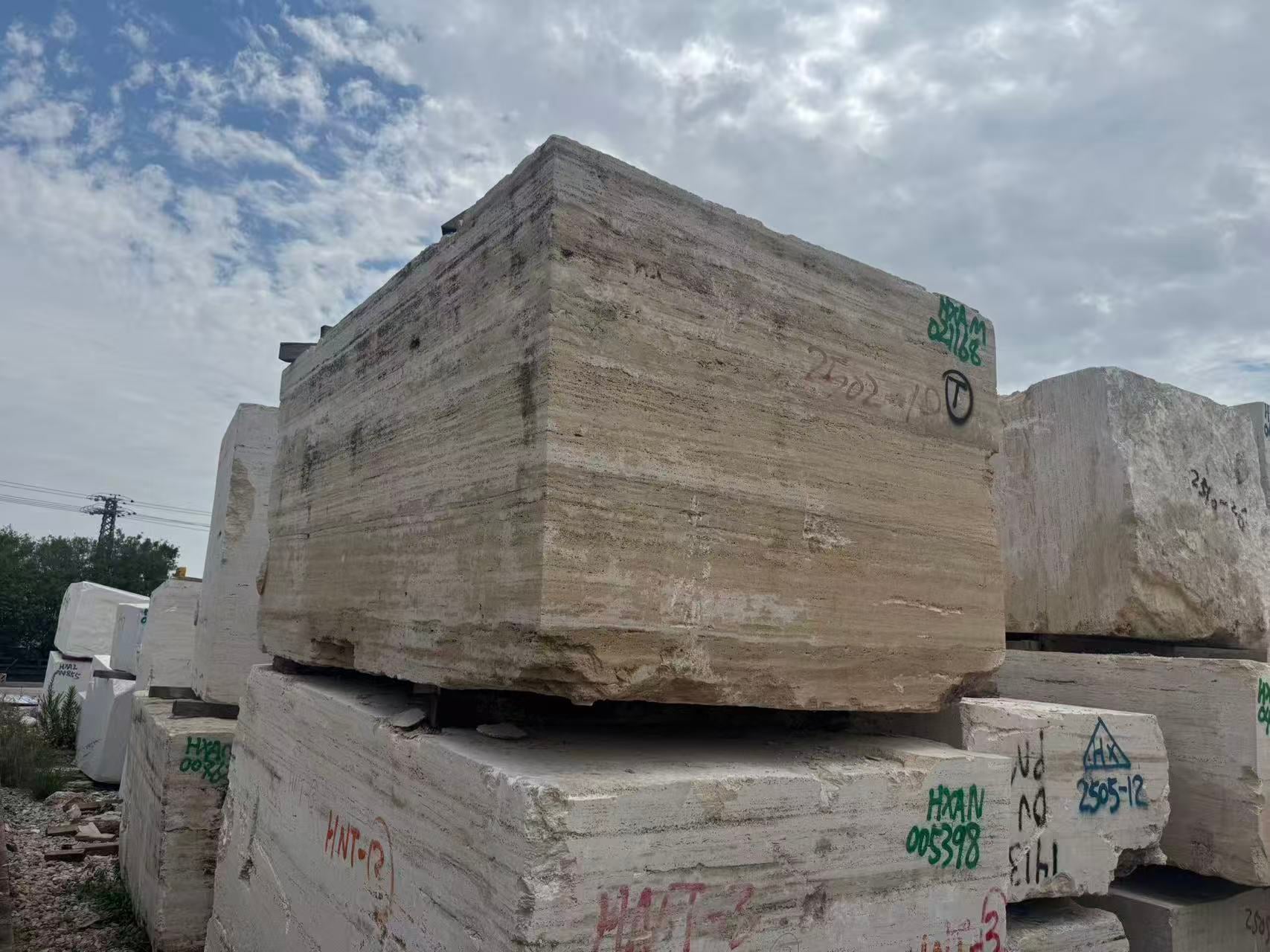
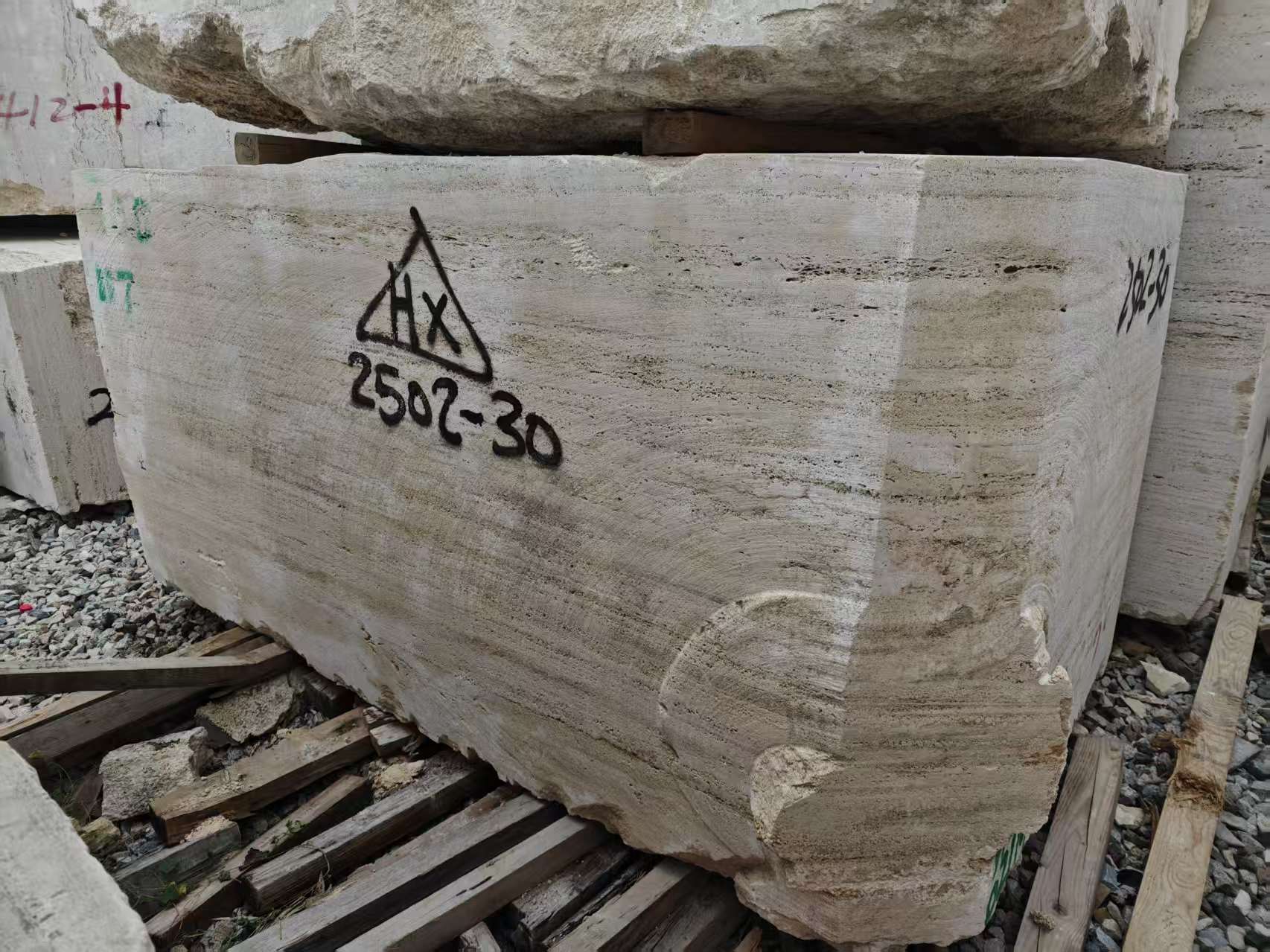
What Are Travertine Blocks?
Unlike travertine slabs or tiles, which are cut thin for cladding and flooring, travertine blocks are worked in their full mass. This solidity is what makes them so valuable for detailed and sculptural stonework. Where a slab is a surface, a block is a volume — one that can be carved, shaped and finished from every angle.
For Sydney architects and designers working on considered, high-end interiors, this distinction matters. Blocks open up design possibilities that flat material simply cannot deliver.
Why Specify Blocks Over Slabs
Erasing Joint Lines
Every joint in a stone installation is a visible break — a seam that the eye eventually finds, however carefully it’s matched. Travertine blocks remove this problem at the source. Because the piece is worked from a single mass, long benchtops, columns, and freestanding forms can be produced without the interruption of a joint, giving the finished piece a sense of continuity that pieced slabs cannot replicate.
Achieving Elaborate Profiles and Details
Detailed edge profiles, deep reveals, and sculptural transitions require material with depth to work with. A slab can be shaped along its face, but a block can be shaped in three dimensions — allowing for waterfall edges, integrated bases, carved detailing, and profiles that read as solid stone rather than applied surface. For Sydney builders managing bespoke joinery and stone elements, this is often the difference between a good result and an exceptional one.
Achieving Beautiful Curves
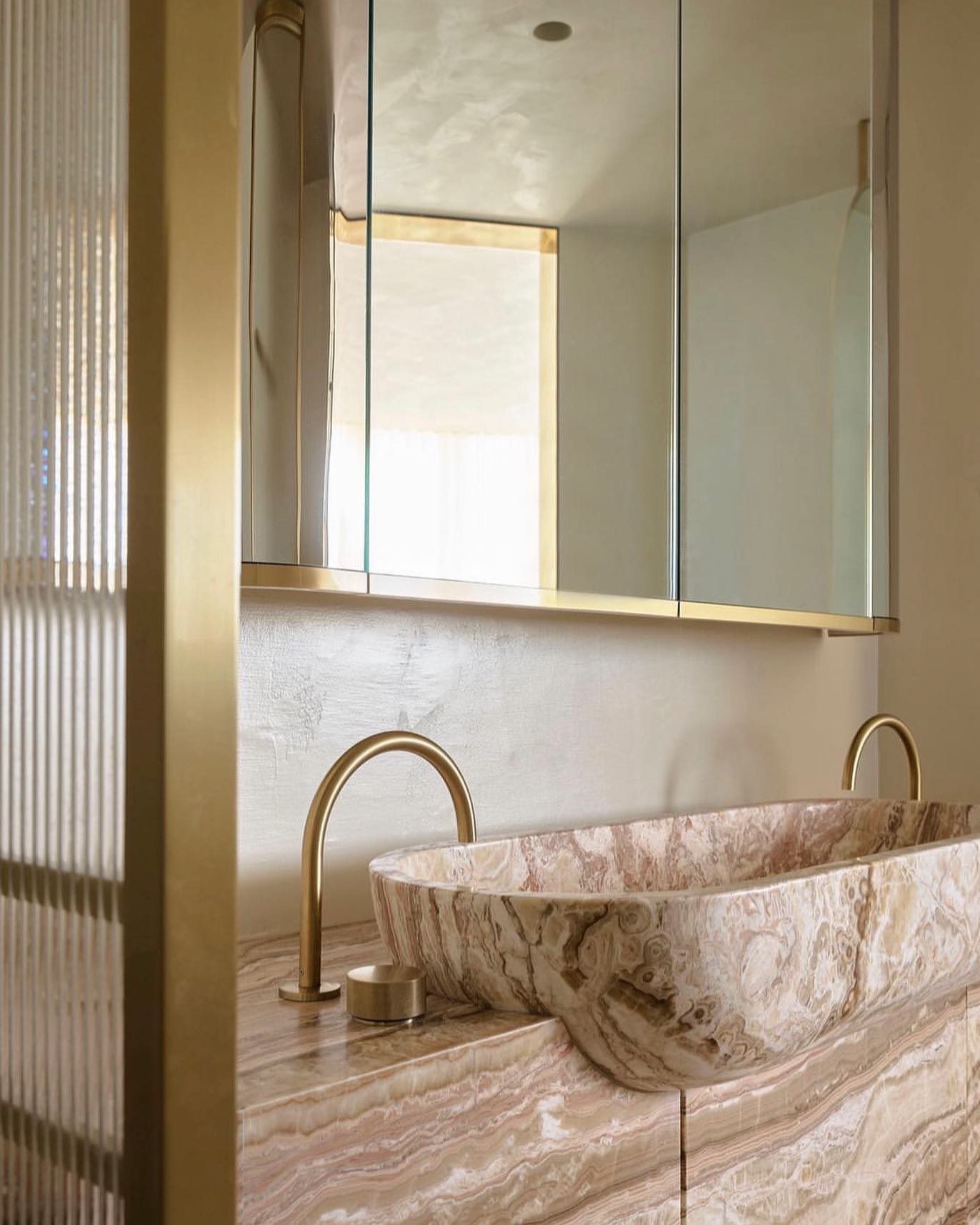
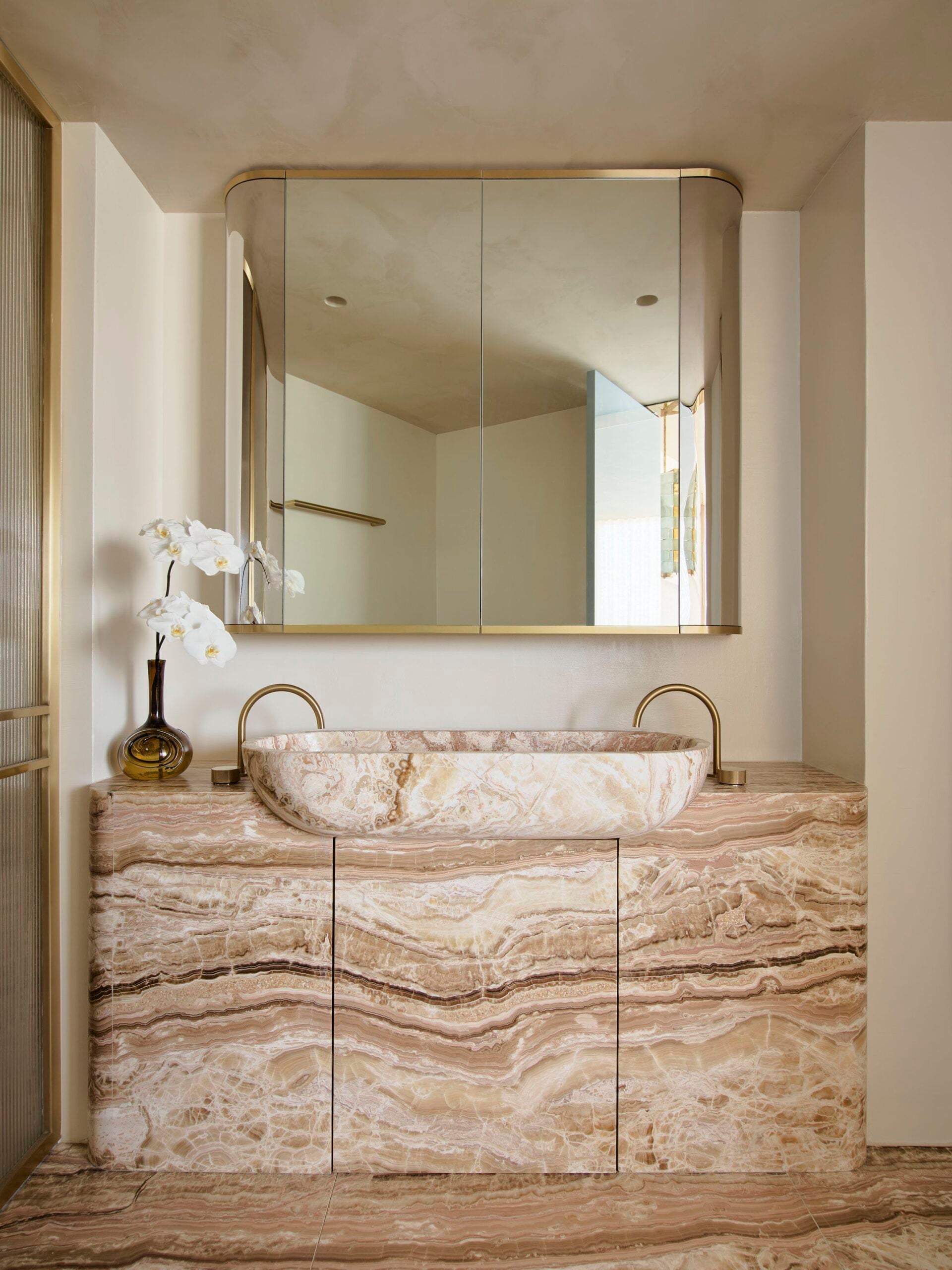
Curved stonework is one of the clearest signals of craftsmanship in a project, and it is also one of the hardest details to get right in slab form. Travertine blocks allow curves to be worked directly into the stone’s mass, producing a smooth, continuous line rather than a curve built up from smaller, jointed sections. The result is a piece that feels sculpted rather than assembled — ideal for feature staircases, sculptural islands, and freeform vanities.
Where Sydney Architects and Designers Are Using Travertine Blocks
- Sculptural kitchen islands with waterfall edges and no visible seams
- Freestanding vanities and basins carved from a single block
- Curved staircase elements and balustrade detailing
- Feature columns and structural cladding where a monolithic look is the goal
- Bespoke furniture pieces that call for depth and dimension beyond slab capability
Working With Travertine Blocks
Because blocks are shaped rather than simply cut, they require early collaboration between designer and stone supplier. Profile details, curve radii, and finish requirements are best resolved at the design stage, before fabrication begins. This is where Euro Marble works closely with Sydney architects and designers from concept through to installation — ensuring the block is selected, worked, and finished to suit the scale and intent of the piece.
A Material for Considered Design
Travertine has long been valued for its warmth, texture, and timeless character. In block form, it becomes a material for architects and designers who want more than a beautiful surface — they want form, continuity, and detail that only solid stone can deliver.
If you’re planning a project that calls for elaborate profiles, seamless runs, or sculptural curves, Euro Marble’s Sydney showroom is the place to see travertine blocks in their full depth and character.